Solar Park Stakeout Survey Using Total Station in Gujarat
A solar park does not get built post by post at random. Every mounting structure has to land exactly where the design drawing says it should, across an area large enough that walking from one end to the other takes real time. That precision requirement is what brought a total station stakeout project our way at a large solar park site in Gujarat.
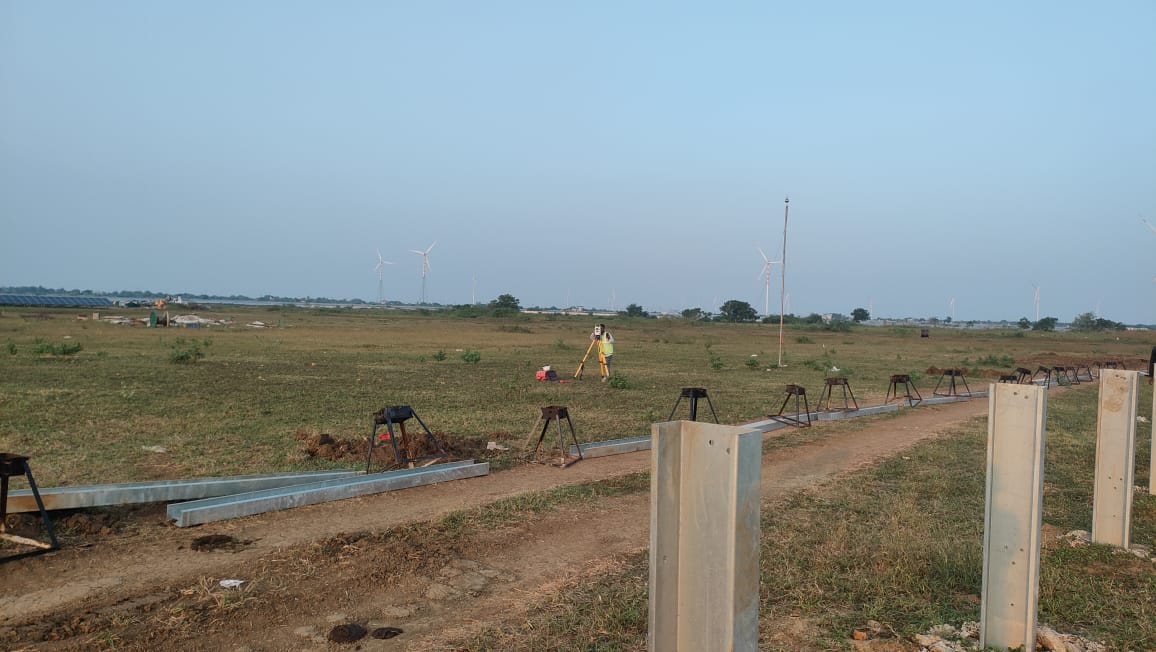
Our scope was narrow and specific: stake out the exact ground position for every solar panel mounting post across the site, so the construction crew could later fix posts and panels on marked, verified coordinates. No design work, no panel installation, just the coordinate accuracy that everything downstream depends on.
Why a large flat site still gets complicated
The ground itself was not the challenge here. It was flat, open, and easy to walk. The challenge was simply scale. A solar park spans a large area, and a total station only holds its accuracy within a certain range from where it is set up. Cover enough ground, and the instrument has to be relocated repeatedly, each shift adding setup time and a fresh round of station verification before staking resumes.
Total Station Operator
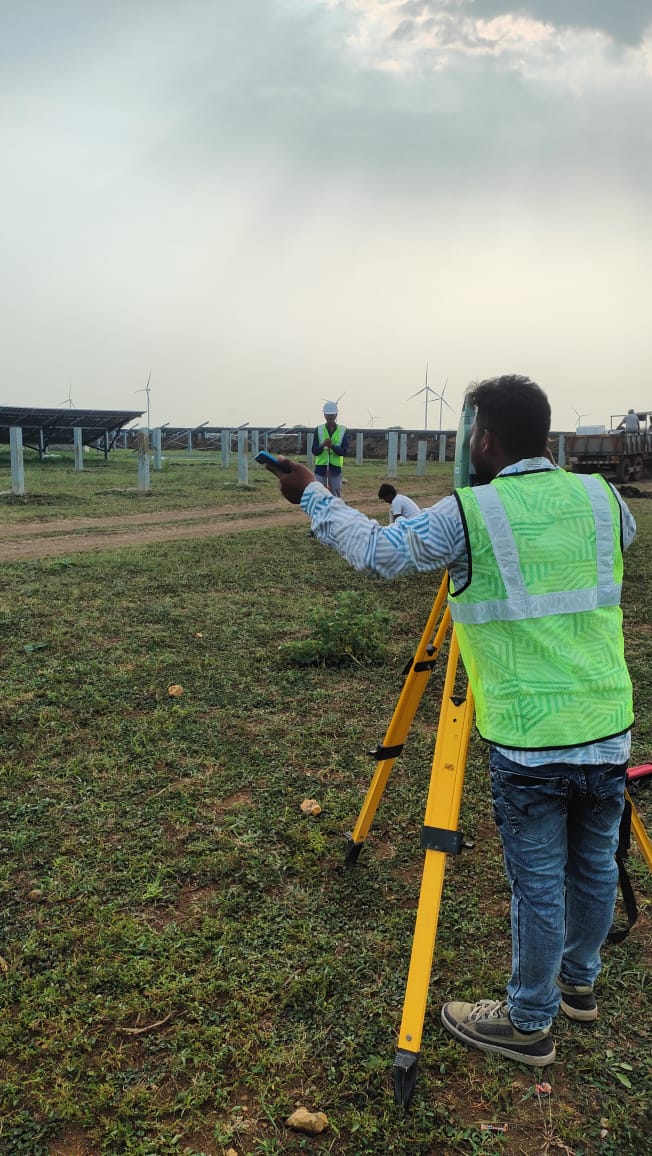
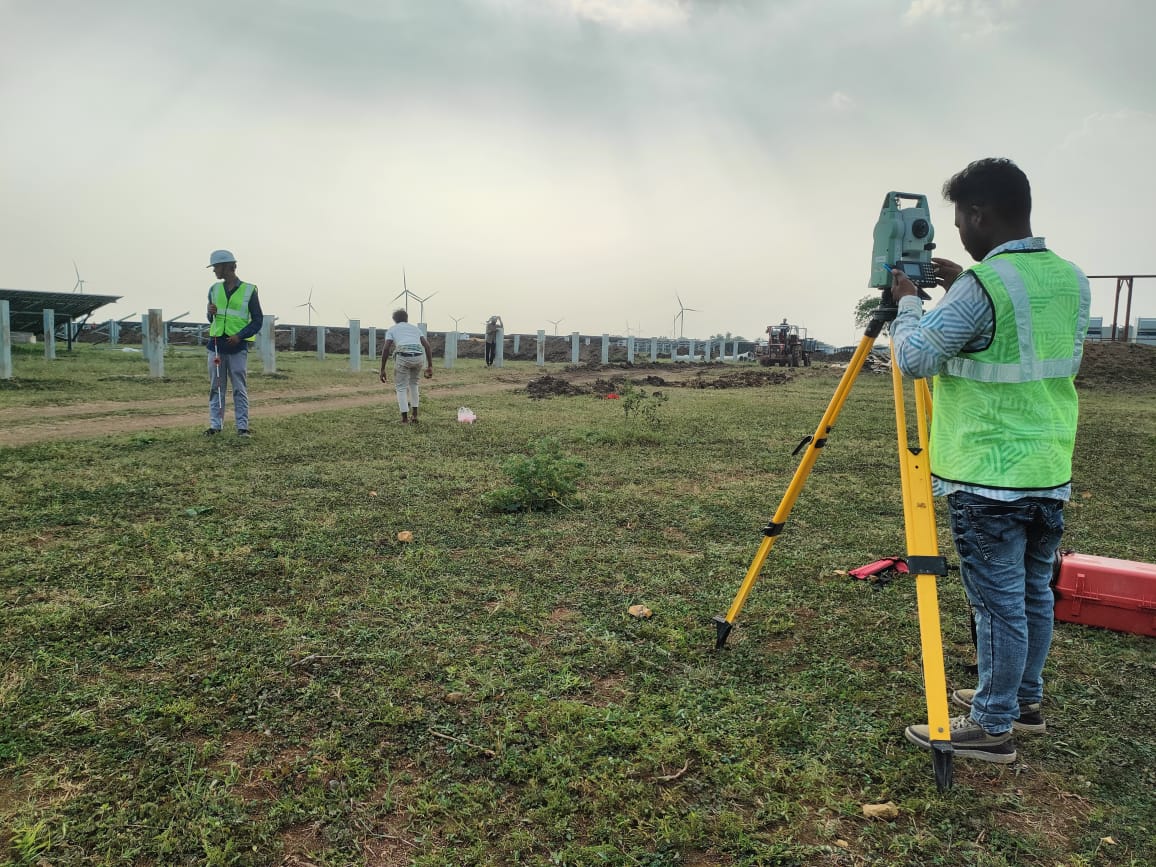
Loads design coordinates into the instrument and directs the prism holder toward the exact point using left, right, forward, back instructions until the position matches the drawing.
Prism Holding Assistant
Carries the prism pole across the site, adjusting position in small increments based on the operator's live instructions until the reading confirms an exact match.
Site Helper
Marks the confirmed point on the ground once the operator signals a match, and keeps the working area clear so the team can move efficiently between posts.
How each post gets staked, step by step
Load the next design coordinate onto the total station
Direct the prism holder toward the theoretical point
Fine tune position until reading confirms exact match
Helper marks the confirmed point on the ground
Team moves to the next post; station relocated as needed
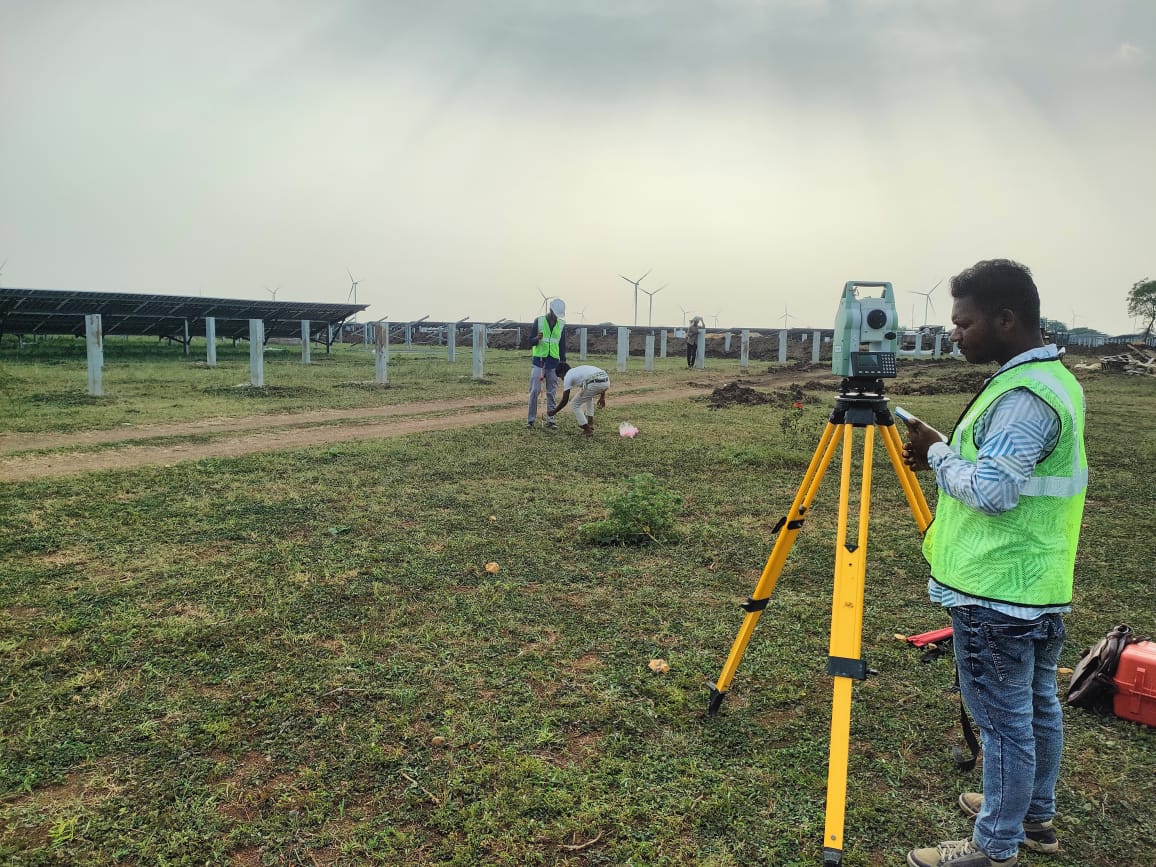
Field note: On a site this large, station relocations were frequent, not occasional. Each move meant re-establishing the setup before staking could resume, which is where a large solar park eats time compared to a small, compact plot.
Holding a 5mm tolerance across an entire park
The client's accuracy requirement for this project was tight: up to 5mm tolerance on post positioning. That number matters more than it sounds. Solar mounting structures are engineered to a specific geometry, and posts placed even slightly off their marked coordinate can throw off panel alignment down the line. A total station, used correctly with a competent operator and a steady prism holder, is built exactly for this kind of precision work over open, unobstructed ground.
Watch the stakeout in action
This short clip captures the full rhythm of the work, from coordinate loading to marking, across the solar park site.
For projects at this scale, stakeout is only one piece of the picture. Larger solar developments often pair total station stakeout with a full drone survey for site planning and progress monitoring, giving both the ground level precision and the wider aerial context in one engagement. The instrument itself, and why it still outperforms other methods for point precision over open terrain, is covered in more depth on our total station technology page.
By the time the crew for this site moved in to fix posts and mount panels, every coordinate on the ground had already been verified against the drawing. That is the quiet, unglamorous part of solar park construction that determines whether the rest of the build goes smoothly or turns into a string of on site corrections.